Now, as you probably know I'm a BIG fan of the Great British Bake-Off and watched the recent Comic Relief Bake-Off specials with glee. Its always fun to see how people react to the challenges set by Mary Berry and Paul Hollywood and also to pick up more tips and recipes along the way.
So I thought I'd better challenge myself to try a new 'Bake-Off ' technique as seen on one of the shows. Paul Hollywood's Chocolate Eclairs got the vote this time. OH is a bit of an eclair fan and I have been promising to make these for ages, so at least I wouldn't have to eat them all myself!
I started off making the choux pastry, which involves melting the butter in water over a low heat......
Then you raise the heat until it bubbles and add in the sifted flour. Take off the heat and beat furiously until it comes together into a ball, then put back on a low heat for a minute to cook the flour a little, stirring so it doesn't stick. Pop into a mixing bowl to cool.
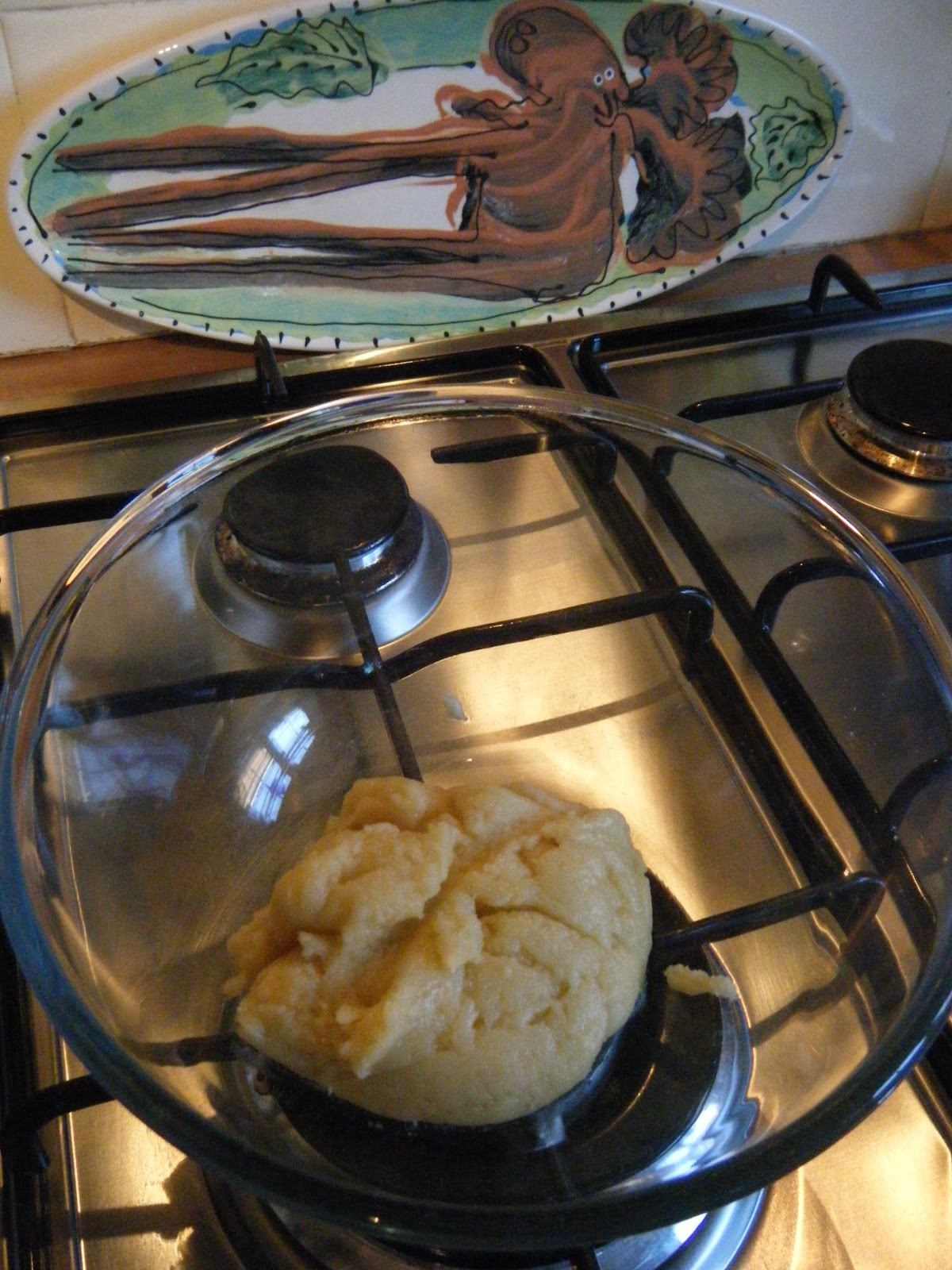
Beat 2 eggs in a separate bowl. The recipe doesn't stipulate what size eggs, so I used 2 medium sized eggs, courtesy of my friend Cathy's chickens. One yolk was so huge, it was double the size of the other one!
Using a hand mixer, you then add the eggs gradually until you get a nice thick batter, suitable for piping and with a lovely shiny appearance. I got to use my fab new Kenwood Hand Mixer too. Its so lovely.
See, nice and shiny.......
Spoon the batter into a piping bag - to make this easier try using a pint glass or jug to hold the bag upright.....
Then pipe onto a greased or lined baking sheet.........
You then bake the pastry in a static 200c oven for 15 minutes. Without opening the oven door, reduce the temperature to 170c and bake for a further 10 minutes until golden. Take out the pastries and make a little hole in each one to release the steam and bake for a further 5 minutes or until golden in colour and crisp all over.
I was so pleased they actually looked right, I nearly squeaked.
Then pipe in some whipped up cream with added icing sugar and vanilla extract. I put the cream into a freezer bag and snipped the corner off to use as a disposable piping bag - it worked a treat.
Top with melted chocolate and voila!
My sister had got me a handy little chocolate melting pot from Lakeland, which is ideal for melting small amounts of chocolate and made it much easier to get the chocolate on the top of the eclairs and not all over everything else!
Milk chocolate on the bottom of the picture and a rather ingenious suggestion by OH to try Montezuma's Dark Chocolate Sea Dog at the top of the picture. Lime and sea salt isn't your usual eclair topping, but trust me....... its gorgeous.
Then demolish! So what will you bake for Comic Relief?
Happy baking!
As well as enjoying the Great Outdoors, I love to bake and create on a pretty regular basis. Along the way you pick up lots of great tips (did you know you can freeze egg whites? Neither did I! ....thanks Nigella), so I thought I would start a blog to share some of them and my creations. The Great British Bake-off has a lot to answer for!
Showing posts with label Paul Hollywood Recipe. Show all posts
Monday, 28 January 2013
Tuesday, 23 October 2012
Paul Hollywood's Milk Loaf
Just a quickie post to say I tried another bread recipe from Paul Hollywood's 'How to Bake' book the other day. Its full of yummy bread and sweet delight recipes, but the one I tried this time was a 'Milk Loaf'.
He seems to favour quite a sticky dough for most of his bread recipes, as you seem to use a bit more water than usual. Also rather than the warm water normally suggested in bread recipes, he opts for cool water. This takes longer for the initial rise to take place, but in the process provides a fuller flavoured dough. If, however, you are baking in a cold wintery kitchen, use slightly tepid water.
Butter is melted in warm milk, then mixed in to your flour, yeast, sugar and salt until its a nice sticky dough. Then tip it out onto an oiled surface and knead for 5 - 10 minutes.
I then popped out for a bit and 3 hours later it was a lovely billowy pillow.......
You then knock it back, shape into a rectangle and pop in a loaf tin...........................
........ so it can then rise for another hour or so until doubled in size.
Then popped in the oven until lovely and coloured.
Buttery rich, with a sweet soft texture it cuts nicely and is lovely with butter and jam when still warm. It also toasts well, though does become a bit crumbly after a few days.
I've never made a white loaf in a tin before, as I usually prefer a round loaf, but I'm really pleased with how it came out. Altogether, rather scrummy!
Happy baking!
Subscribe to:
Posts (Atom)